Read how Sports Labs' in-house Balance Test Device quantifies the offset between a football's centre of mass and centre of volume to the millimetre.
Read MoreAs we move to Autumn and Winter in the Northern Hemisphere it is key to make sure your pitch is not susceptible to drainage and water infiltration problems.
Like any sports surfaces, artificial sports pitches can sometimes have drainage issues. Drainage issues can also lead to freezing susceptibility in the winter so a pitch can either be waterlogged or frozen preventing play.
As designers we design from the bottom up but if a drainage issue occurs then to find the root cause we work from the top down due to the pitch being installed. This is to identify the issue in the hope it is higher up to make remediation more manageable, and that every layer down to the foundations of the pitch does not have to be removed.
This article is written from a minority of organic filled pitches that have been found to have problems, and shared to support proactive, and if the alternative due to circumstances, quick reactive protocol to fix and get the surface playable again. This will reduce cancellation of fixtures and encourage preventative measures as early as possible for field owners. It has been an issue with SBR filled pitches but there is more exposure and uncertainty with alternative infills on the market now.
What Blocks Drainage in an Artificial Pitch
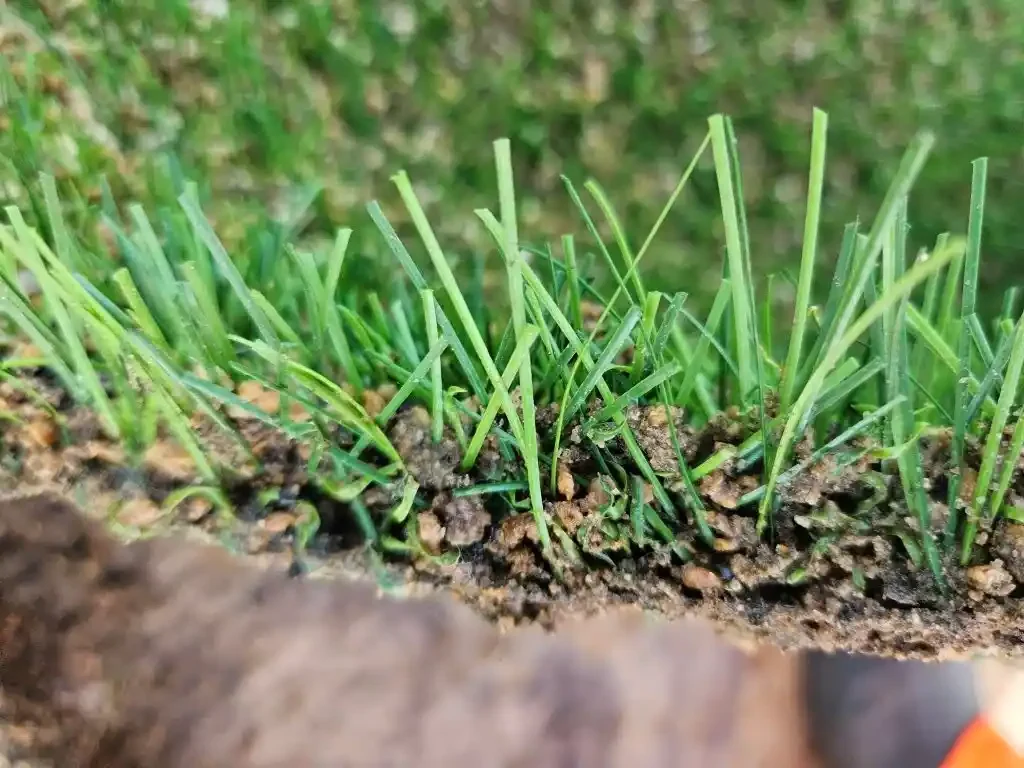
Water commonly passes vertically in sports pitches to drainage infrastructure such as lateral and peripheral drainage and then discharged, or reused in some instances.
In some pitches the water course is blocked and the sub-base drainage channels become useless as the water cannot get there. The water course can become blocked from the performance infill, stabilising infill, carpet, shockpad, engineered or dynamic layer.
The majority of problems we see is poor choice of stabilising infill, which coincidentally is the finest material, more susceptible to having fines (dust), and in some instances restricted by geography and the supply chain. This can be exaggerate by fines found in organic material however this is not a new issue we have seen this with SBR pitches.
Once it is blocked the problem can get seriously more complicated, contractual and the end user has a pitch that becomes a debate. Look out for fine material on installation for all infill.
How Infill Grading Curves Cause Drainage Failure
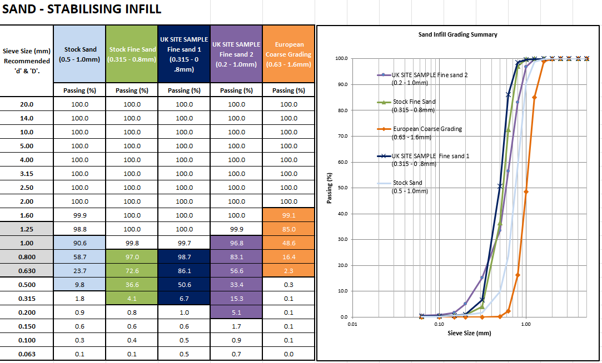
In a grading curve for infill the bottom and top sieve for particle size grading it identified where 10 – 90% of the materials is found. Sand in the UK has historically been 0.315 – 0.8mm and in Europe 0.5 – 1.0mm.
Immediately we can see why the UK might be more susceptible to drainage issues. A typical grading curve:
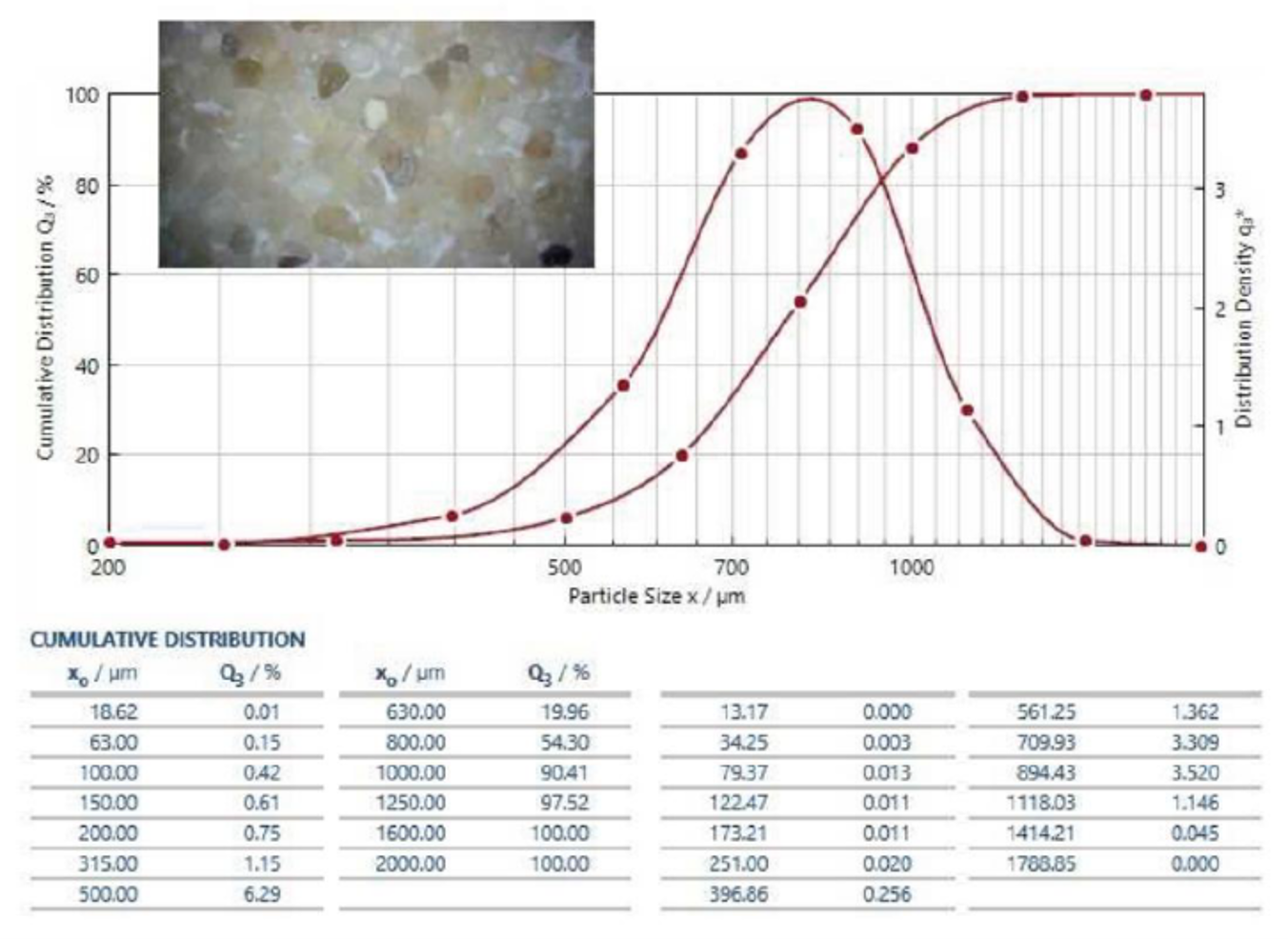
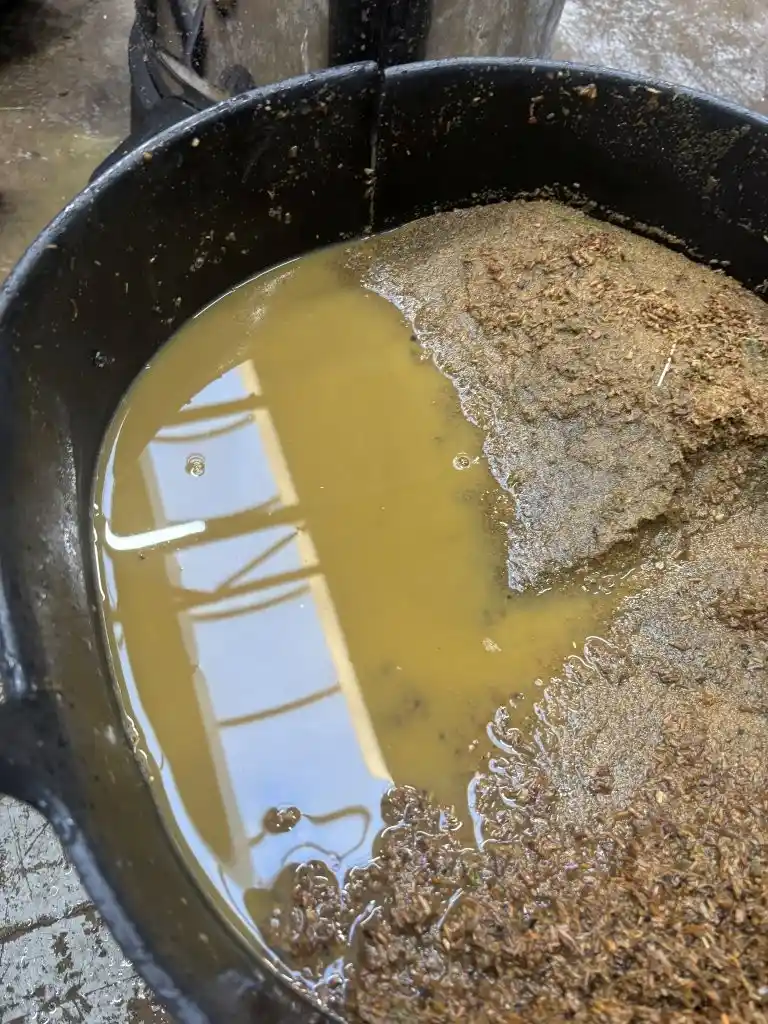
Furthermore, it does not take considerable amount of fines to block a sports pitch, less than 10% of the volume could be sufficient.
The graph below shows different material with the coloured area signifying differences in grading from coarser to finer examples:
Like What you're reading?
Subscribe and be the first to get the latest industry news and exclusive Sports Labs updates.
Don’t worry! We don’t spam. We only send you the good stuff. You can unsubscribe anytime!
Your subscription could not be saved. Please try again or contact us at info@sportslabs.co.uk.
Successful! Please verify your subscription in the confirmation email sent to the email address you provided.
How to Diagnose an Artificial Pitch Drainage Problem On Site
Drainage tests can be carried out on site and in the laboratory under BS EN 12616:2022 protocol.
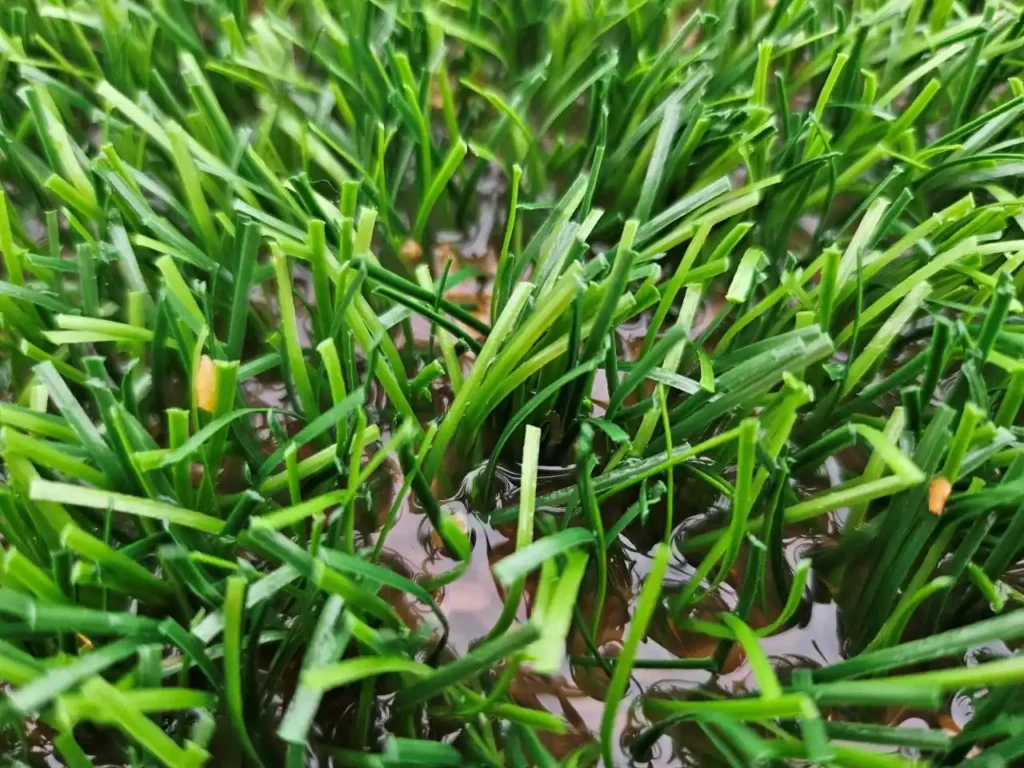
Step 1: Full system test
A full system infiltration test is undertaken on the pitch in a susceptible area in the current condition to the relevant governing body standard and testing methodology.
Step 2: Performance infill removed test
The performance infill (Organic in this case) is removed and infiltration testing carried out with the carpet and sand only.
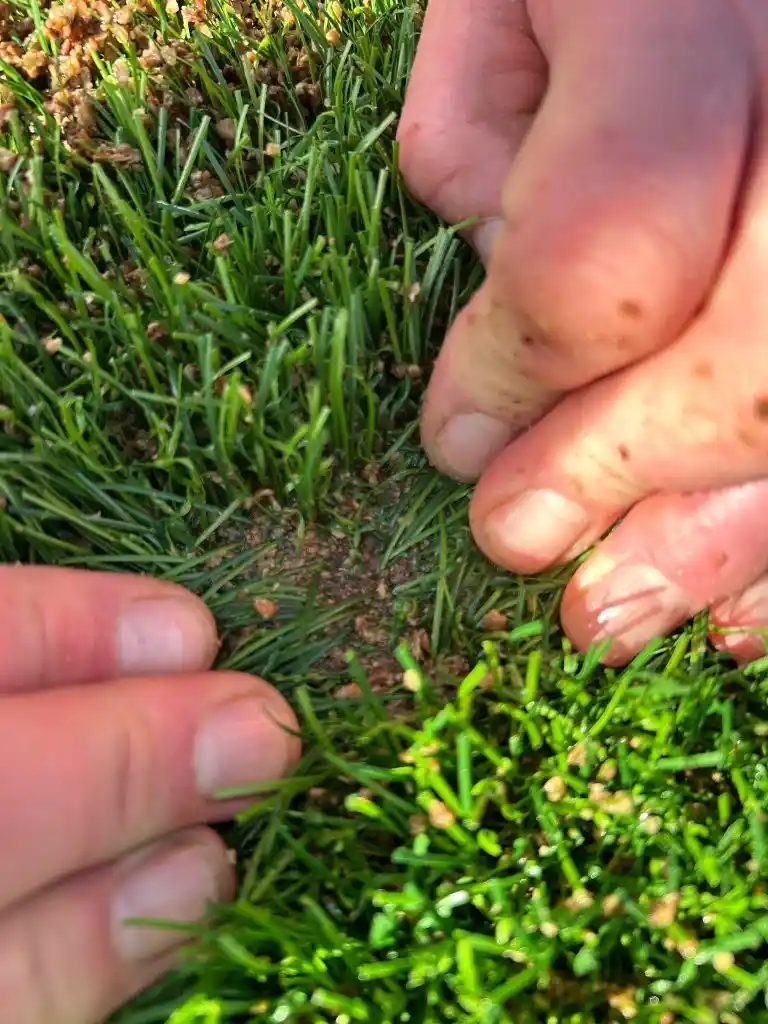
Step 3: Stabilising infill removed test
The stabilising infill is removed and infiltration testing carried out. This is now infill free, testing the infiltration performance as an empty carpet and underlying layers.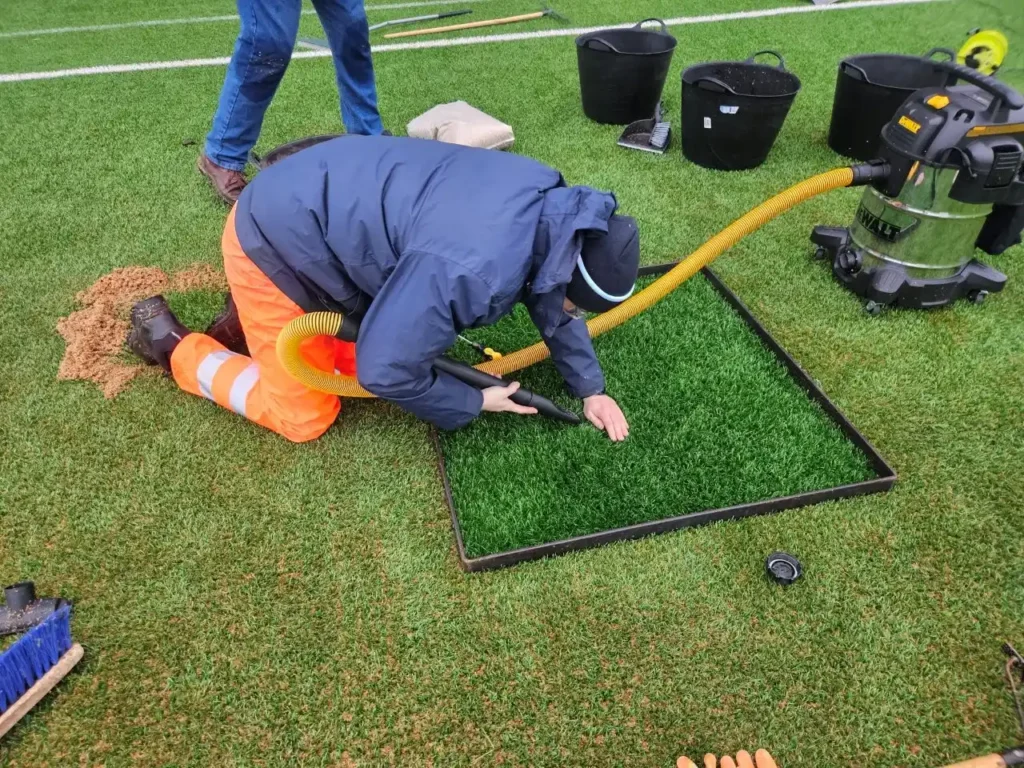
Step 4: Sample extraction to the lab
The infill is removed from site and taken to the laboratory for forensic examination.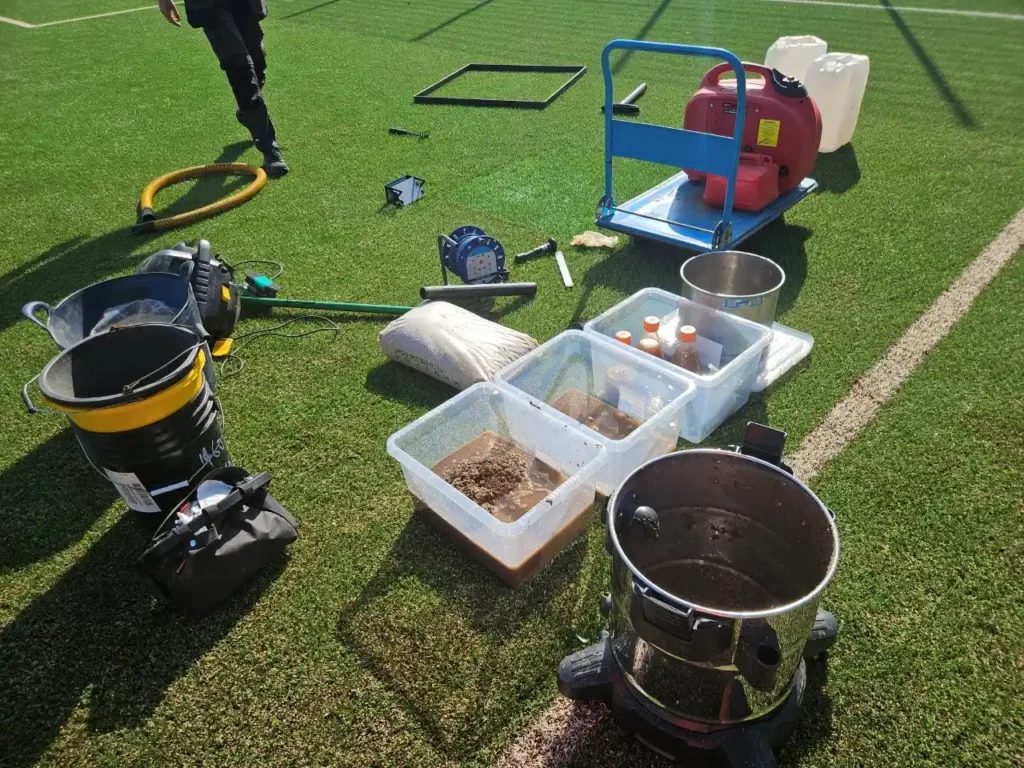
Step 5: Carpet backing inspection
An inspection of the carpet backing is carried out to inspect the drainage holes. Any material removed for laboratory analysis.
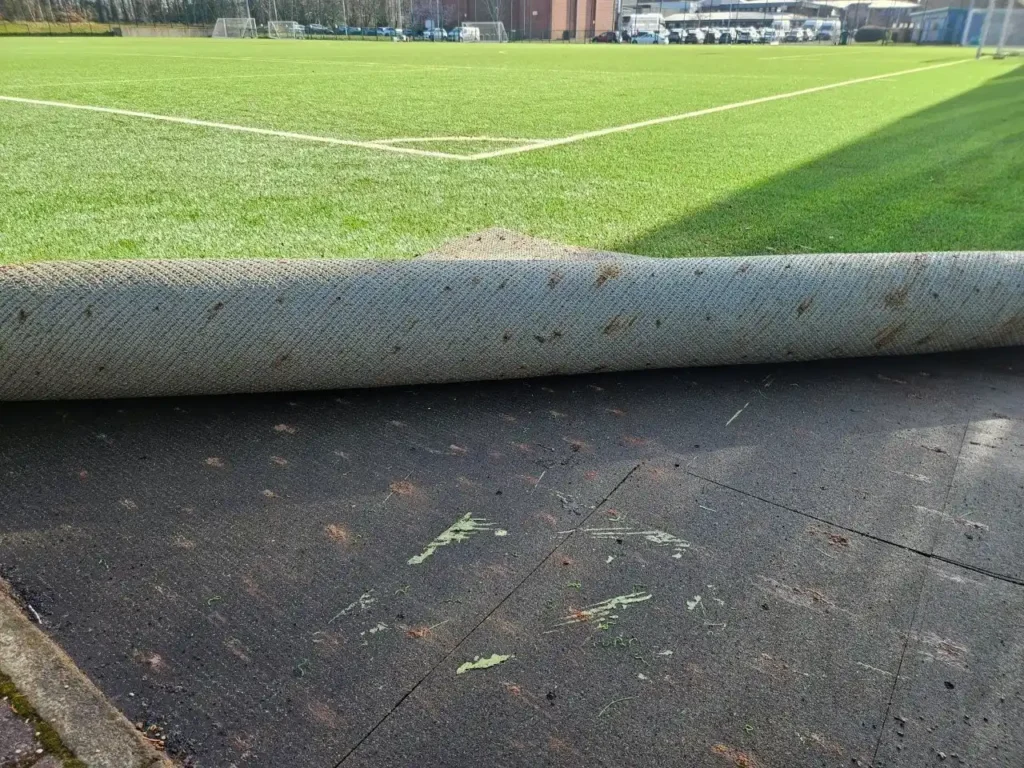
Step 6: Shockpad and engineered layer test
Checks on layers under the carpet are then carried in out in the order presented. This can be shockpad then engineered or dynamic layer or no shockpad and straight to engineered or dynamic.
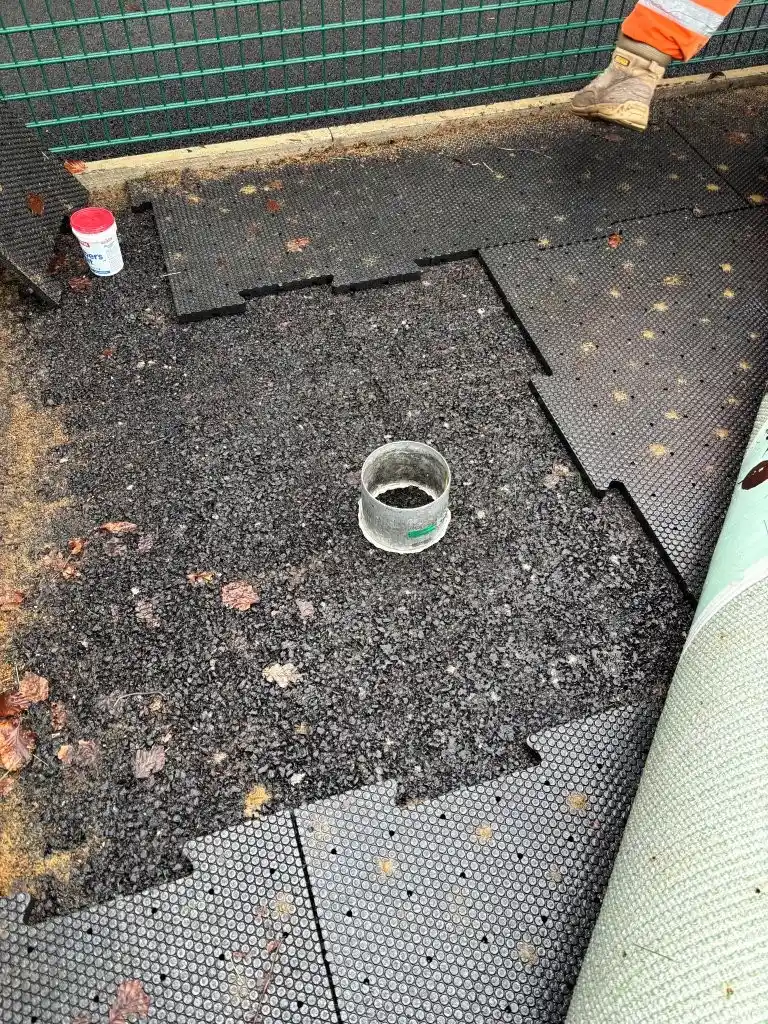
Step 7: Carrier drainage inspection
The lateral and peripheral drainage network is inspection at the accessible manholes to ensure the water course if clear and flowing to exit.
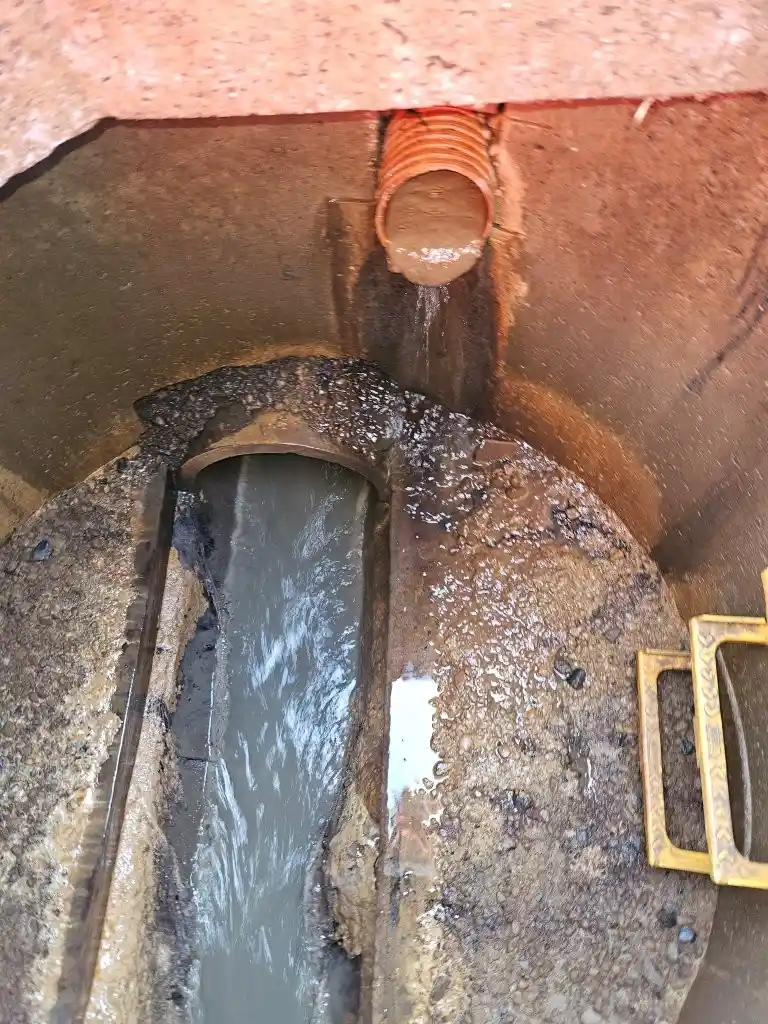
Defining What Infill It Is
There is a protocol for defining if it is a stabilising infill or performance infill, we undertake these tests in the laboratory using a TGA (Thermo Gravimetrical Analysis) device.
Retain any samples from site (Stabilising and performance infill, carpet, contaminated water) that can be taken to the lab for further interrogation. This has been key to the investigative reports we have undertaken.
This is a standard procedure that Sports Labs have to approach a project like this, so reach out for more detail.
Can Biofilm Cause Drainage Problems on Synthetic Pitches?
Within the layers of pitches it is possible for biofilms/EPS to form in unwanted quantities through microbial activity until dried or stabilised.
In some infill that is open cell moisture is more likely retained, and while possibly improving performance like skin injury or ball surface performance it can also exaggerate the microbial activity.
The majority of pitches we have been involved with have other issues identified however this is potential issue for all surfaces. Biofilms form anywhere overtime where moisture and nutrients are found together.
Regular maintenance on pitches is important to prevent this and any other organic build us such as moss, algae. Hot, high UV environments also reduce probability of build up so geography is at play here.
How to Prevent Drainage Problems at Design Stage
Don’t take the risk of finer sand as stabilising infill so during design and construction take adequate steps:
- Check the lab report, think about a safety factor and do due diligence of proposed supplier.
- Beware of a flat pitch gradient, lateral drainage to the pitch surrounds or moving to draining areas in the infill layers is much less likely with a flat pitch.
- Ensure drainage checks, such as key stage inspections, these are key preventative measures.
- Infill selection of stabilising sand
- Remove lower sieve 1 sieve from declared as an option
- Have a minimum sieve size 0.5mm
- Consider selection of 60% across two sieves, reduce well graded ‘locking’ material.
Ongoing Maintenance to Prevent Drainage Problems
Problems with drainage, noting not surface tension sometimes experienced on install, have shown to get worse over time regular maintenance is essential.
- Be clear on your maintenance by the supplier manual (O & M Manual).
- Engage specialist pitch maintenance contractors to help prevent or then manage the issue.
- Look more into the detail in the laboratory report to ensure site material, especially locally supplied, mirrors what the manufacturer has specified.
- If the infill is supplied locally such as sand, give the grading interrogation the time it deserves, have the due diligence on the material carried out by an expert.
- Batch sample infill material during install so you don’t have to turn back the clock and remove it.