Global Leaders in Sports Testing
Talk to Our FA Testing Team
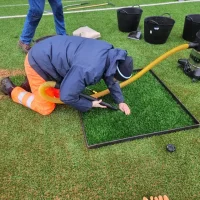
Sports Labs conducts FA-accredited testing for football facilities across England.
Proudly Accredited & Approved by




Field Testing
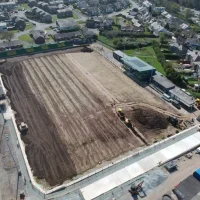
We’re leading experts in sports surface testing, certification and site condition assessments for all sports surfaces.
Laboratory
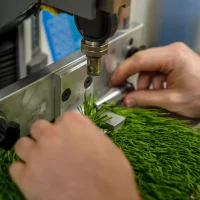
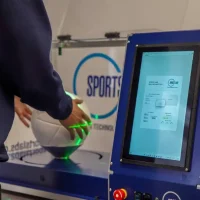
Independent, scientifically rigorous laboratory testing that supports safety, performance and regulatory compliance for equipment and fields.
Consultancy
Independent, expert advice before, during and after construction of new or refurbished sports facilities.
Innovation & Development
Sports Labs Newsletter
Be in the Know With Field Notes

Subscribe to get access to exclusive articles and be the first to read new posts.
Frequently Asked Questions
Who are Sports Labs?
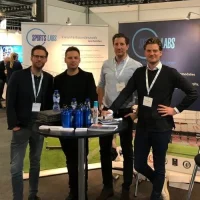
We are a global independent sports technology testing and certification organisation headquartered in Livingston, Scotland.
Operating since 1998 and one of the world’s leading test houses for sports surfaces, equipment, and technology we offer both laboratory-based and field-testing services accredited to national and international standards.
Examples being governing bodies including FIFA, World Rugby, FIH, ITF, FIBA, and World Athletics, and we actively contributes to the development of the testing standards that are applied.
How long has Sports Labs been in business?
Sports Labs has been operating since 1998 having over 25 years of experience in sports surface testing, certification, and technology.
What does "independent test house" mean?
An independent test house operates without commercial ties to the manufacturers, installers, or suppliers of the products it tests. This means results are impartial and objective. Sports Labs has no financial interest in whether a product passes or fails, which is why governing bodies, facility owners, and procurement teams trust its reports.
What services does Sports Labs offer?
Sports Labs offers six categories of service: Site Testing (field testing of installed surfaces), Laboratory Testing (scientific testing of materials and products), Certification (governing body certification for pitches and technology), Equipment Design & Build (bespoke testing apparatus), Consultancy (feasibility, specification writing, project management, CAD, tender review), and Innovation (R&D, knowledge transfer partnerships, emerging technology testing).
What is the difference between laboratory testing and field testing?
Laboratory testing evaluates turf components under controlled scientific conditions before a product is installed. Field testing is carried out by accredited technicians on the completed, installed pitch at the venue. Most governing body certifications require both laboratory product approval first, then field validation of the installation.
What is ISO 17025 and why does it matter?
ISO/IEC 17025 is the internationally recognised standard for the competence of testing and calibration laboratories. Sports Labs holds UKAS accreditation to this standard, meaning it has been independently verified as technically competent to produce accurate, reliable test data. For governing bodies like FIFA and World Rugby, ISO 17025 is a mandatory requirement for any laboratory certifying sports surfaces. Test results from non-accredited labs will not be accepted.
What accreditations does Sports Labs hold?
Sports Labs holds international accreditations such as FIFA, World Rugby, FIH, ITF, FIBA, IHF, World Bowls and World Athletics for both laboratory and field testing. These accreditations are underpinned quality control accreditations such as ISO 17025, ISO 9001:2015 and ISSS. National body accreditations specific to a country or territory include the SFA, FA, FAI, ECB, and GAA. Memberships include SAPCA, SASPI, ESTC, ASBA, ASTM, and the GMA.
Does Sports Labs operate globally?
Does Sports Labs publish technical content or a newsletter?
Yes. Sports Labs publishes Field Notes, a free technical newsletter focused on sports surfaces, available under the Fields Notes page. Topics include FIFA testing manual updates, artificial turf certification advances, floodlight testing, drainage, and sustainability. A natural and hybrid grass publication called Pitch Matters is also available at www.propitch.online.
How do I contact Sports Labs?
You can contact Sports Labs at info@sportslabs.co.uk or call them on +44 (0)1506 444 755
Their United Kingdom address is 1 Adam Square, Brucefield Industry Park, Livingston, EH54 9DE, Scotland, UK
Operating hours are Monday–Friday, 8am–5pm UK time. A contact form is also available at sportslabs.co.uk/contact.
Let’s Get You Tested & Certified
Work with a team of experts that are always ahead of the game.